
Dragonfist Limitless
Bitter ExtractsSimulation
4.73.77K Reviews
- Version
- 4.25.08
- Installs
- 500.00K
- Age Rating
- Teen
Screenshots
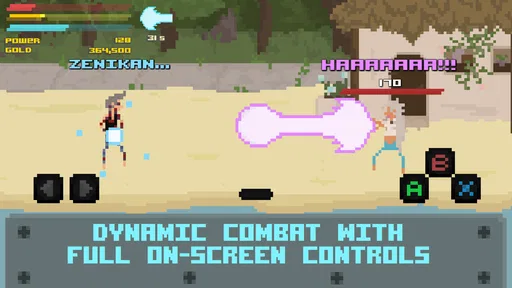
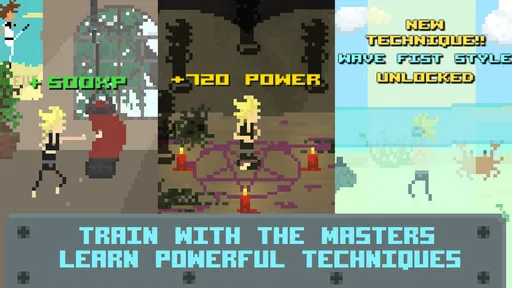
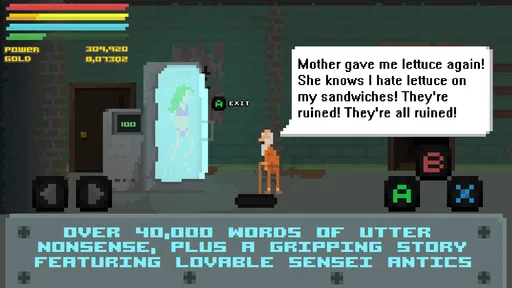
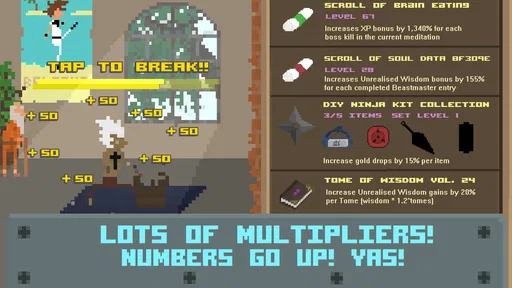
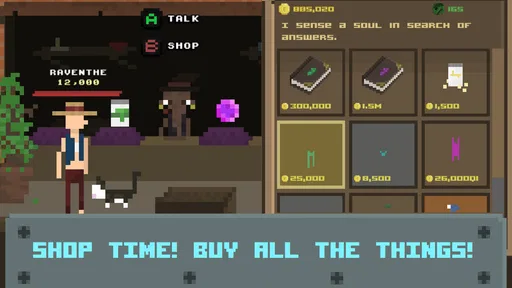
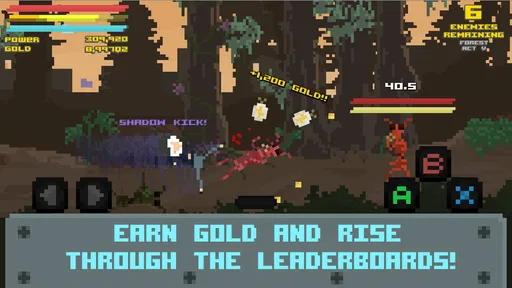
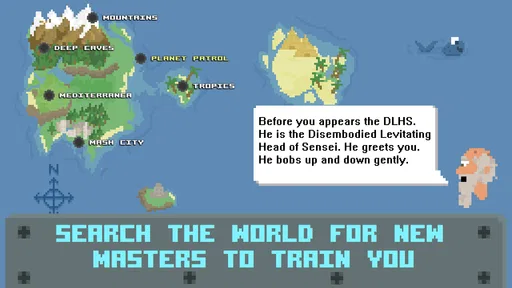
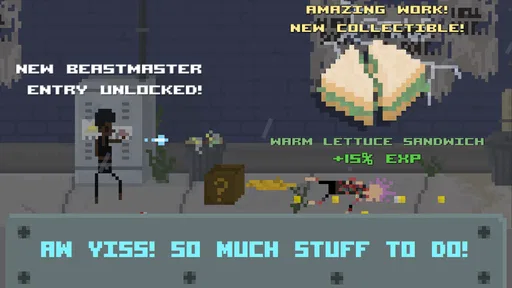
Our Review of Dragonfist Limitless
 Analysis by Appyee
I found Dragonfist Limitless most interesting as a game that can sit quietly in the background of a shared household device while still giving someone a reason to check in and make a decision. It is a free simulation game from Bitter Extracts, but its presentation leans into a darkly comic incremental role-playing style rather than a calm building or management sandbox. The basic appeal is easy to understand: train, improve, return later, and keep pushing a character through a deliberately exaggerated world.
That makes it a curious fit for a family tablet, a spare phone, or any device that several people use at different times. It is not the kind of game where two people need to play simultaneously, and that can be convenient. One person can make progress, hand over the device, and another can inspect the current state or continue the training. At the same time, the Teen content rating matters because the humor and tone are not aimed at young children. I would treat it as a shared game for older household members, not as a universal family title.
How the game works when a household shares the device
My first impression was that the game is built around short visits rather than long sessions. That is the natural rhythm of an incremental RPG: check what has happened, choose a useful improvement, collect or spend resources, then leave it running in your routine until the next opportunity. I like that structure for busy days because it does not demand a fixed appointment. A player can look at it during a break, before bed, or while waiting for another task to finish.
On a shared device, that rhythm creates an obvious advantage. Someone can play for a few minutes without taking over the tablet for an hour. A parent might make a training choice in the evening, while an older teenager checks the results later. The game is therefore easier to coordinate than a conventional action RPG that requires uninterrupted attention and a specific controller. It feels more like maintaining a strange little project than sitting down for a complete gaming session.
There is also a trade-off. Incremental games can become confusing when several people make decisions without discussing them. If one player spends a valuable resource on a personal preference and another was saving for a different upgrade, the disagreement is not caused by the game alone; it comes from using one progression path as a shared project. I would decide in advance whether the device is hosting one joint character or whether each person gets a separate turn. That small rule prevents most household friction.
For a realistic example, imagine a family tablet in the living room. An adult checks the game after dinner and starts a training choice, then a teenager opens it later while waiting for a download or watching television. The second player can review what changed and continue from there, but only if everyone understands that the same progress is being altered. If the intention is independent play, I would avoid sharing one save and use separate device accounts or profiles where the operating system and game support them. I would not assume that the game itself provides family separation.
Setting boundaries before the first training session
The most useful preparation is not a complicated setup; it is agreeing on what the game is allowed to become. Because the title is free but offers in-app purchases ranging from $0.99 to $59.99 per item, I would make the payment boundary clear before handing over a shared device. A free download can still lead to spending decisions, and incremental games are particularly good at making a small purchase feel like a shortcut to the next satisfying improvement.
If children can access the tablet, I would keep purchasing under an adult-controlled device setting and make sure nobody treats the store button as part of normal progression. That recommendation is especially important here because the Teen rating already signals that the game should be discussed in terms of age and content, not simply installed because it costs nothing to start. The game may be a good fit for an older player who enjoys cynical humor, but I would not use it as a default game for a younger child.
A second boundary concerns time. Incremental design encourages frequent checking, and that can quietly turn a relaxed game into a habit of opening the app whenever there is a spare moment. In my experience, the healthiest way to share this kind of title is to treat it as a scheduled check-in rather than a constant background obligation. A household could agree that each person gets one visit after school or work, or that the game is only opened during a shared evening gaming period.
There is a practical benefit to this approach: it makes progression easier to understand. If someone opens the game every few minutes, it becomes harder to remember which choice produced which result. Longer gaps between visits make the training loop feel more deliberate. I would also keep a simple spoken rule such as “say what you changed before passing the device on.” That is more useful than trying to remember every tap.
Coordinating progress without turning it into an argument
When I play an incremental RPG alone, I can experiment freely. On a shared device, experimentation needs a little structure. Before spending resources, I would ask whether the goal is fast advancement, a particular style of build, or simply seeing how strange the next part of the game becomes. Those goals can point toward different decisions, and the game is more enjoyable when everyone understands the reason behind a choice.
One non-obvious strength of this format is that it gives a household a natural conversation point. A player can explain why a training decision seemed worthwhile, and the next player can judge the result instead of merely taking over. That makes the game more cooperative than its single-device format might suggest. It does not require formal multiplayer to create shared involvement; the progression itself becomes the thing people discuss.
However, I would not recommend sharing one run with someone who dislikes delayed feedback. Incremental systems often ask you to make a choice without seeing its full effect immediately. A person who wants direct control, instant reactions, or a clear win condition may find the handoff process frustrating. In that case, a traditional turn-based RPG or a straightforward local multiplayer game would be a better household choice.
My preferred routine would be to give each player a defined role. One person can focus on choosing the next training direction, another can keep track of spending, and a third can simply read the latest developments and decide whether the humor works for them. These roles should rotate, because the game becomes stale if one person always controls the meaningful choices. This is not a required feature or an official mode; it is a practical way to make a shared run feel fair.
Another useful habit is to pause before buying anything. Since the game has optional purchases, I would separate “the game is asking me to decide” from “the store is offering me a faster route.” That pause helps reveal whether the purchase solves a real problem or merely interrupts the satisfaction of earning the next improvement. For a household, it also creates a clear moment to ask the account owner before money is involved.
Age, tone, and trust on a common screen
The Teen rating should shape where and with whom this game is played. Its pitch-black comedy is part of the identity, so I would not describe it as harmless background entertainment for every age group. An older teenager may appreciate the exaggerated tone, while a younger child could focus on the cartoon-like training concept without understanding or enjoying the darker jokes. If adults and children share a device, I would preview the tone personally and decide whether it fits the people who may encounter it.
This is also a trust issue. A shared tablet is often used for schoolwork, streaming, shopping, and personal accounts as well as games. I would avoid letting a child use an adult’s unlocked store account, even if the game itself is free to begin. The important boundary is not only whether the player can open the game, but whether they can make purchases or change the household’s established settings. Dragonfist Limitless should be treated like any other game with optional spending: enjoyable under clear rules, risky when access is casual and unsupervised.
The game’s tone may also make it a better fit for a private phone than a family-room screen. If the humor is likely to prompt questions or discomfort around younger siblings, playing with headphones or on an individual device avoids awkward interruptions. That does not make the game unsuitable; it simply recognizes that a dark comedy can be entertaining for one person while being a poor choice for a mixed-age room.
I would also talk about account boundaries before installing it. The developer is Bitter Extracts, and the current version is 4.25.08, but those details do not replace the need to understand whose progress is being used. If the game is installed on several devices, I would not assume that progress automatically follows the player between them. I would check the in-game and device options directly before relying on a shared save, and I would avoid promising a child that their progress is portable unless I had tested it myself.
What makes it different from ordinary simulation games
Calling this a simulation game can create the wrong expectation if someone is looking for farming, city planning, or realistic management. The simulation label is better understood here as a progression loop: the player develops a character or run through repeated choices and watches the results accumulate. The role-playing layer gives those choices more personality, while the comedy keeps the process from feeling like a spreadsheet.
Compared with a conventional action RPG, the game asks for less physical precision and less continuous attention. You do not need to master movement or memorize a long sequence of combat inputs to enjoy the central loop. That makes it approachable for someone who likes character growth but is not interested in demanding controls. It is also easier to fit into a shared-device routine because a short visit can still feel productive.
Compared with a peaceful management simulator, the tone is the major dividing line. Someone who wants gentle decoration, realistic planning, or a relaxing visual routine may dislike the deliberately bleak comedy. The game’s appeal depends on accepting that the joke and the progression system are intertwined. If the writing feels too dark or the incremental structure feels too repetitive, no amount of optimization will turn it into a cozy simulator.
Compared with a standard idle game, the role-playing framing gives the repeated checking more context. You are not only watching numbers grow; you are following a training-oriented fantasy and making choices inside that premise. The downside is that players who prefer a completely hands-off experience may find the decisions more involved than expected, while players who want deep tactical control may find them lighter than a full RPG.
Who will enjoy the routine, and who should skip it
I would recommend it to players who enjoy incremental progression, unusual humor, and the pleasure of returning to a project that has changed since the last visit. It is especially suitable for someone who wants an RPG-flavored game that can be played in small pieces rather than completed in one sitting. The free entry point makes it easy to test the tone and loop before deciding whether it deserves a permanent place on the device.
It is also a good candidate for an older household member who likes discussing game choices with others. The shared-run idea works when people enjoy comparing priorities and accepting that not every decision will be optimal. A teenager and an adult could turn the training path into a small collaborative experiment, provided they agree about spending and do not expect separate progress from one shared session.
I would skip it if you want a story-heavy adventure with constant new locations, a competitive multiplayer experience, or a game that is clearly suitable for young children. I would also look elsewhere if you dislike dark comedy or if repeated check-ins feel like pressure rather than fun. A more traditional RPG is a better choice for direct control and dramatic battles; a classic management simulator is better for calm planning; and a local multiplayer game is better when everyone needs to act at the same time.
The audience response suggests that the concept has connected with a substantial group of players: it holds a 4.7 average from around 39 thousand ratings and has passed 500 thousand installs. I see those figures as useful context rather than a guarantee. A strong average can tell you that the central idea works for many people, but it cannot predict whether this particular mix of incremental mechanics and pitch-black humor will suit your household.
Device fit, cost, and the practical download decision
The game supports Android devices running version 7.1 or later, which gives it a relatively broad starting point for older compatible phones and tablets. Before installing on a shared device, I would still check available storage, battery habits, and who normally uses the device, because compatibility alone does not solve household conflicts. A game that runs well is not automatically a game that belongs on the family tablet.
Since the download is free, the sensible approach is to treat the first session as a tone test. Let the intended players experience the humor, inspect the pace of progression, and decide whether the repeated training loop feels rewarding. Do not start by planning around the optional purchases. If the free experience does not feel enjoyable, spending will not fix the mismatch; if it does feel enjoyable, there is still no reason to buy anything until the player understands what the purchase changes.
The release date was Jul 20, 2021, and the current version is 4.25.08. For me, that makes the version number worth checking when troubleshooting or comparing what appears on different devices. On a shared household setup, two people may assume they are seeing the same game when one installation has not been updated. Keeping the app current is a basic but useful coordination step, especially when one person reports a screen or option that another cannot find.
The game is marked Teen, so I would put age suitability ahead of the attractive free price. I would also explain that an in-app purchase is not the same thing as a required subscription or an entrance fee: the game can be started without paying, while individual items can cost from $0.99 to $59.99. That distinction helps younger players understand why “free” does not mean “no spending can happen.”
My household verdict after weighing the trade-offs
My overall view is positive, but conditional. Dragonfist Limitless has a clear personality, and its incremental RPG structure is well suited to short visits, casual experimentation, and shared conversations about progression. I like that it can occupy a few minutes without demanding the full attention that an action game requires. For an older player who enjoys grim jokes and gradual improvement, it is an easy game to keep nearby.
For shared use, the best arrangement is one where the household treats progression as a common project or gives each player a clearly separated turn. I would not hand it to a young child simply because it is free, and I would not leave purchasing access undefined. The Teen rating, dark tone, and optional items all call for adult judgment, especially when the same device is used by people of different ages.
The strongest practical tip is to establish three rules before playing: decide whose progress is being changed, agree that purchases require the account owner’s permission, and set a reasonable checking routine. Those rules address the main weaknesses of a shared incremental game without taking away its relaxed appeal. They also make it easier to tell whether the game is genuinely entertaining or merely becoming a reflexive habit.
After that, the decision is straightforward. Choose it if you want a free, character-focused incremental RPG with a sharp comedic edge and you are comfortable with a Teen-rated experience. Skip it if your household needs child-friendly content, independent profiles, simultaneous multiplayer, or a more traditional simulation. For the right older player, I can recommend it as a quirky game to revisit throughout the day; for a mixed-age family device, I would install it only with clear boundaries and a shared understanding of what the screen is being used for.
Verdict
Strengths of Dragonfist Limitless
- Fast-paced combat feels responsive and satisfying.
- Distinct heroes offer varied playstyles and team combinations.
- Short battles work well for quick mobile gaming sessions.
- Progression systems provide clear goals and regular upgrades.
- Stylized visuals give the game a recognizable identity.
Limitations of Dragonfist Limitless
- Energy limits can interrupt longer play sessions.
- Higher stages may require repetitive farming for upgrades.
- Random character draws can make team building unpredictable.
- Some menus and systems may feel overwhelming for newcomers.
- Online features require a stable connection to function properly.
Similar Picks in This Category
View All
Truckers of Europe 3
Wanda Software4.3

Town Building Life Simulator
XGame Global4.2

Fidget Toys Trading・Pop It 3D
Freeplay Inc4.7

Sculpt People
CrazyLabs LTD4.4

Scary Teacher 3D
Z & K Games4.2

Hair Tattoo: Barber Shop Game
CASUAL AZUR GAMES4.3
Frequently Asked Questions
What is Dragonfist Limitless, and what kind of game is it?
Dragonfist Limitless is an action-focused fighting game built around martial-arts combat, character progression, and increasingly difficult battles. Players typically control powerful fighters, learn or upgrade abilities, and face enemies through a series of stages or challenges. Before downloading, remember that the exact experience may vary by device and version, so checking the current store description and screenshots is recommended.
Can Dragonfist Limitless be played offline?
Some parts of Dragonfist Limitless may be available without a constant internet connection, especially basic gameplay or previously loaded content. However, online access can still be required for downloading updates, synchronizing progress, viewing advertisements, claiming online rewards, or accessing events and other connected features. If offline play is important to you, test the game after installation and review its latest requirements.
Is Dragonfist Limitless free to download and play?
Dragonfist Limitless may be offered as a free download, but free access does not necessarily mean that every feature is completely free. Games in this category commonly include optional purchases for progression items, currency, upgrades, characters, or ad removal. Review the in-app purchase information before starting, and consider enabling purchase restrictions if children also use your device.
What devices are compatible with Dragonfist Limitless?
Compatibility depends on your operating system, device model, available storage, and the version published in the Google Play Store or Apple App Store. Even when a phone meets the minimum requirements, older hardware may experience slower loading, reduced graphics quality, overheating, or occasional crashes. Check the official store listing before downloading and keep enough free space for updates and temporary game files.
Does Dragonfist Limitless require an account or collect personal data?
Dragonfist Limitless may allow certain features to work immediately, while progress synchronization, cloud saves, customer support, or online services can require an account or platform login. The app may also collect technical, usage, or purchase-related information depending on its privacy settings. Read the developer’s current privacy policy and permissions carefully, particularly if you are concerned about advertising, analytics, or data sharing.
Play our best games!


